
Liposuction in Bergen: liposculpture with WAL
At ILEANA in Bergen, we offer liposuction and liposculpture using water-assisted technique (WAL). You meet plastic surgeon Ileana Rodríguez Standal for an individual assessment of treatment options, expected results, limitations and risks.

What are liposuction and liposculpture?
Liposuction is a surgical procedure in which subcutaneous fat is removed from specific areas through small skin openings. Liposculpture describes how liposuction is used to shape contours and transitions between different areas.
The treatment may be suitable for localized fat deposits in people with relatively stable weight. Liposuction is not a treatment for general overweight and does not remove excess skin. Skin elasticity, fat distribution and anatomy affect what can be achieved.
Water-assisted liposuction with WAL
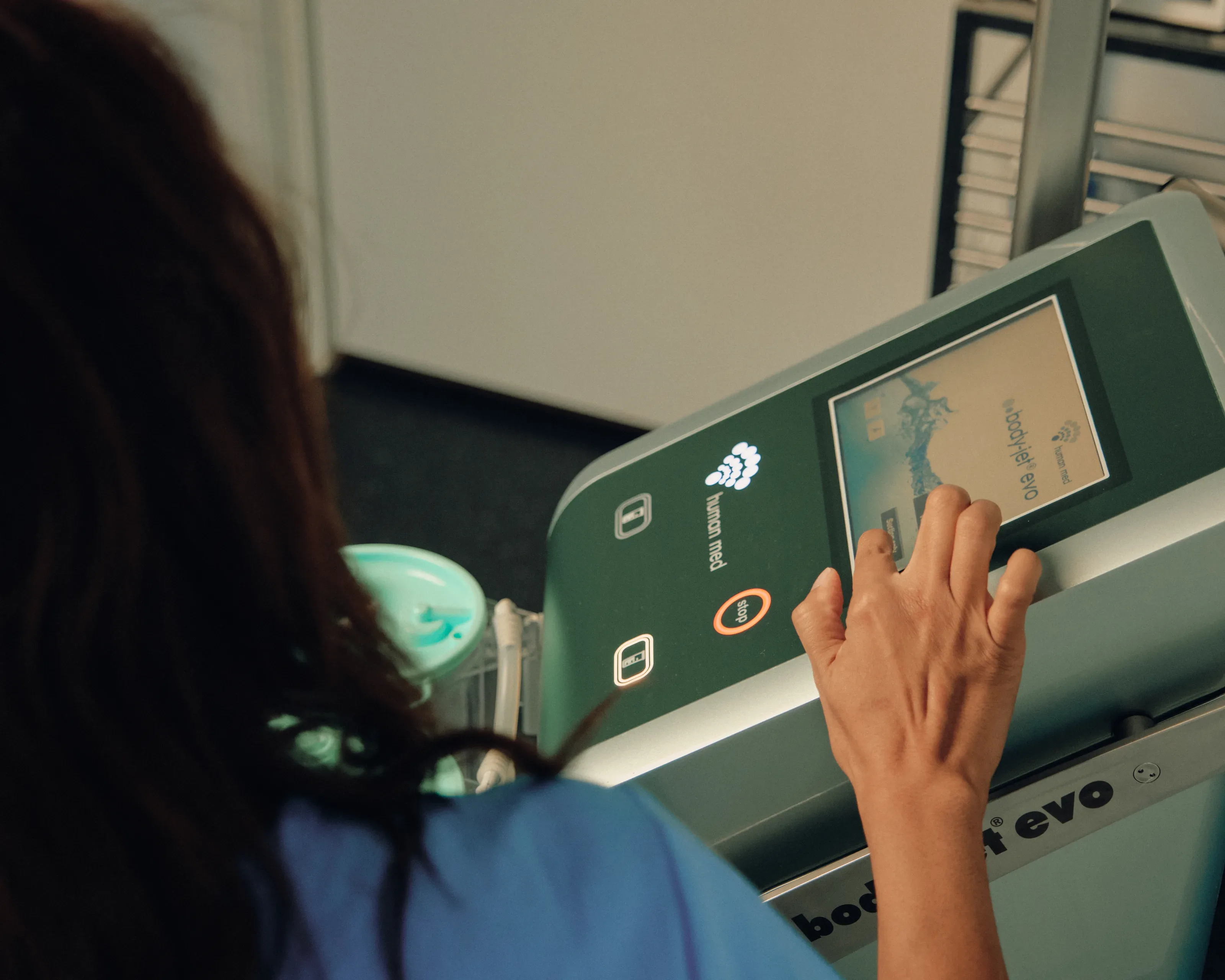
WAL stands for "water-assisted liposuction". With this technique, a controlled, fan-shaped jet of fluid loosens the fat tissue while it is suctioned out through a cannula. At ILEANA, we use Body-Jet EVO.
Treatment areas, extent and anesthesia are tailored to each patient. WAL is a surgical method that, like other liposuction, carries a risk of complications. At the consultation, we go through the expected effect, limitations, treatment alternatives and follow-up before you decide on surgery.
Who may the treatment suit?
Liposuction may be suitable for localized fat deposits in people with relatively stable weight and skin with sufficient elasticity. The treatment reduces subcutaneous fat, but it is not a method for weight loss and does not remove excess skin.
At the consultation, the plastic surgeon assesses fat distribution, skin quality, health and expectations. If there is significant excess skin, other surgery may be more suitable. You receive an individual assessment of whether treatment is medically sound and what can realistically be achieved.
How the treatment works
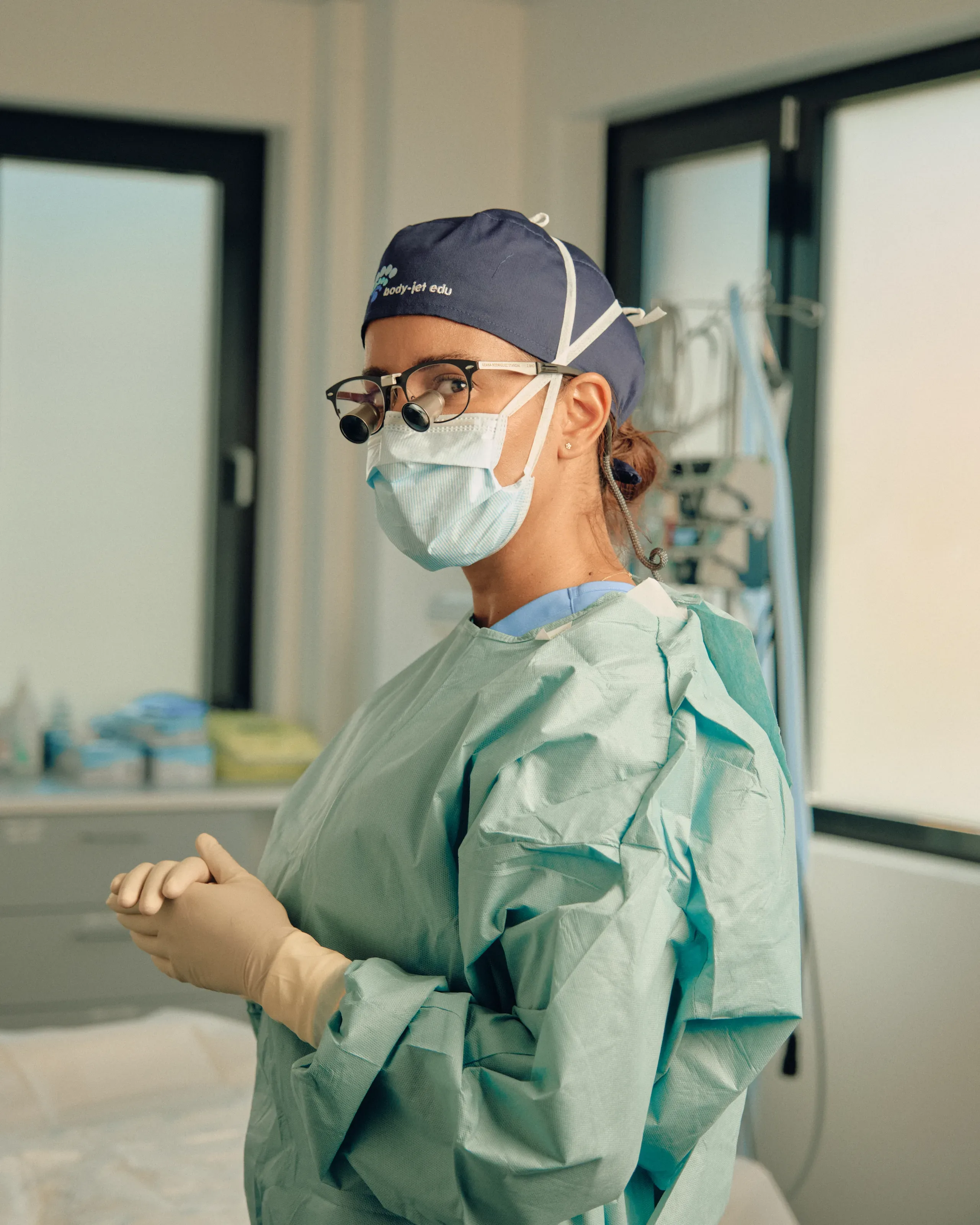
In water-assisted liposuction (WAL), the fat tissue is loosened with a controlled jet of fluid and suctioned out through a thin cannula. The cannula is inserted through small skin openings. The treatment is planned with regard to anatomy, skin quality and the transitions between areas.
Possible treatment areas include the abdomen, flanks, back, upper arms, thighs, knees, ankles and the area under the chin. Local anesthesia or general anesthesia is chosen based on the extent of the procedure and a medical assessment. Several areas can be treated at the same time when this is considered safe.

After the treatment
After liposuction, swelling, bruising, tenderness and temporary changes in sensation are common. Treated areas may feel firm or uneven while the tissue heals. You receive written information about compression, wound care, pain relief and activity, as well as a plan for follow-up checks.
When can I go back to work after liposuction?
The time you need off depends on the extent of the procedure, which areas were treated and how physically demanding your work is. Sedentary work can usually be resumed sooner than work involving heavy lifting or a lot of physical activity. Before the operation, you receive individual guidance on expected time off and any need for adjustments.
How long should I wear compression after liposuction?
At ILEANA, we recommend wearing a compression garment for at least eight weeks after liposuction. Duration and daily use are adjusted individually based on the treatment area, the extent of the procedure and the healing process. The garment must fit correctly, and the need for further compression is assessed at the follow-up check.
When can I exercise after liposuction?
Light walks and regular movement are recommended early after the operation. Activity is increased gradually as healing progresses. The time for resuming running, strength training and other strenuous activity is agreed with the surgeon based on the treatment area, the extent of the procedure and the course after the operation.
How long does the swelling last after liposuction?
The swelling subsides gradually over weeks and months. Extent and duration vary between individuals and treatment areas. Temporary differences between the sides and firmness in the tissue may occur during healing. If swelling clearly increases or appears suddenly, especially together with pain, redness or fever, you should contact the clinic.
When can I see the result after liposuction?
The contour gradually becomes clearer as the swelling subsides and the tissue heals. The appearance in the first weeks is therefore not representative of the final result. It can take several months before the result can be assessed, and the progress is monitored at the follow-up checks.
Is there pain after liposuction?
Tenderness, a feeling of tightness and pain are common after the procedure. The intensity varies with the treatment area, extent and individual sensitivity. You receive a tailored plan for pain relief. Severe or increasing pain, or pain that is not relieved as expected, should be assessed by a doctor.
Can the skin become loose after liposuction?
Liposuction reduces subcutaneous fat, but does not remove excess skin. The skin's ability to adapt to the changed contour depends on factors such as elasticity, age and the extent of the procedure. Existing skin laxity may become more noticeable after the treatment. Skin quality and any need for other surgery are assessed before the operation.
Is the result of liposuction permanent?
The fat cells that are removed are gone, but the remaining fat cells can increase in size with weight gain. Aging and changes in skin elasticity can also affect the contour. Relatively stable weight helps preserve the result over time. A specific result or full symmetry cannot be guaranteed.

Important to know
Liposuction is a surgical procedure that carries a risk of complications. Possible complications include bleeding, infection, fluid collection, delayed wound healing, scarring, contour irregularities and asymmetry. Changes in sensation may be temporary or lasting. Serious complications, such as blood clots, pulmonary embolism, damage to deeper tissue and complications related to anesthesia, can occur.
The treatment reduces subcutaneous fat, but does not remove excess skin. Skin laxity may become more noticeable after the procedure, and if there is significant excess skin, other surgery may be more suitable. A specific result or full symmetry cannot be guaranteed.
Before the operation, you receive an individual assessment of risk, expected effect and treatment alternatives. Your health, medications, nicotine use and the extent of the procedure are part of the assessment.
How we work
Phase 1
Consultation
The first consultation is about understanding your needs and assessing whether surgery is the right treatment. You receive a thorough medical assessment, information about possibilities and limitations, and plenty of time to ask questions before making a decision.
Phase 2
Treatment plan
If treatment is appropriate, an individual plan is drawn up. The patient receives information about preparations, the procedure itself and what matters in the period afterwards.
Phase 3
Treatment
Treatment is carried out with a focus on professional precision, safety and natural results. Each procedure is tailored to the patient and performed only when there is a clear indication.
Phase 4
Follow-up
Follow-up is an important part of the treatment. The patient is closely monitored during the healing phase, with clear information about what is normal, what requires attention and what the road ahead looks like.
Price list
Prices incl. VAT
Abdomen, entire
49 000,–
Abdomen, upper (under the breasts)
35 000,–
Hips/flanks
49 000,–
Back/bra line
37 000,–
Outer thighs
42 000,–
Inner thighs
36 000,–
Inner knees
35 000,–
Upper arms
36 000,–
Ankles
29 000,–
Neck (double chin)
40 000,–
Additional charge for extra area
When treating several areas, a price reduction of up to 50% can be given on the smallest area.
Additional charge for general anesthesia
15 000,–
Frequently asked questions
How do I know which treatment is right for me?

During the consultation we go through what you want help with, your medical history, medications, previous procedures and relevant findings. You receive a professional assessment of the available options, limitations and alternatives, including when surgery is not recommended.
Can several treatments be combined?
Some procedures can be combined, but this is assessed individually. The extent of surgery, operating time, anaesthesia, medical risk and expected recovery must all be safe. Some treatments should be carried out in separate sessions.
What type of anaesthesia is used?
The procedure can be performed under local or general anaesthesia. The choice depends on the treatment area, the extent of the procedure and an individual medical assessment. At the consultation we review which type of anaesthesia is suitable for you. The final plan is agreed before the procedure.
Is the result permanent?
The fat cells that are removed are usually not replaced by new fat cells in the same number. However, the remaining fat cells and the body's tissue can still change with weight changes, ageing, hormones and pregnancy. No treatment can guarantee a specific or lasting cosmetic result.
What is included in the price of surgery?
Price and content are confirmed in the written treatment offer. Scheduled follow-up appointments, suture removal and any local anaesthesia or sedation are normally included. Any extras, such as general anaesthesia, compression garments or an overnight stay, are agreed in advance.
Considering treatment? Start with a safe assessment.
book a consultation